SaaS MVP development — live in 15 working days.
One focused web product. Real authentication, data, business logic, billing when it matters, and a production launch — not a prototype dressed up as delivery.
Core SaaS MVP
$15,000
15
working days
100%
code ownership
One useful loop, complete.
A real user can sign up, reach the product's core result, and come back to use it again. Everything else has to earn its place in version one.
A real SaaS MVP needs more than its headline feature.
The goal is not to squeeze ten features into a sprint. It is to include the minimum system around one valuable workflow so early usage produces trustworthy evidence.
Authentication
Real accounts, sessions, password recovery, and the access rules the first workflow actually needs.
Focused onboarding
The shortest setup that gets a new user to value — not a product tour they will skip.
One core workflow
A complete path from input to useful result. This is the hypothesis the MVP exists to test.
A sane data model
Production data stored with clear ownership, relationships, and room for the next proven use case.
User dashboard
The place users return to see work, results, status, or history — shaped around the core job.
Billing when it proves value
Stripe subscriptions, checkout, and plan access when paid demand is part of the first test.
Minimum admin tools
Enough visibility to support early users without turning the admin panel into a second product.
Product communication
Transactional email and essential notifications, tied to real product states rather than marketing automation.
Useful analytics
Events for activation, core-action completion, and return usage — not a dashboard full of vanity metrics.
Production launch
Live infrastructure, environment configuration, error visibility, and a handover your next engineer can use.
Build the path to value before building the roadmap.
For an AI document product, the first useful release might look like this. Your exact workflow will differ; the discipline does not.
- Step 01
Sign up
Account + access
- Step 02
Upload
Document or data
- Step 03
Process
AI + business logic
- Step 04
Result
Useful output
- Step 05
Subscribe
Stripe billing
- Step 06
Return
History + repeat use
Billing can move later for an invite-only beta. An admin tool can stay minimal. A second persona can wait. The test is whether the smallest complete loop lets a real user reach — and repeat — the promised value.
What fits a 15-day SaaS build — and what needs a different plan.
Product category alone never guarantees fit. The deciding factor is whether one primary workflow can be made complete, safe, and launchable inside a fixed boundary.
Often a good fit
One product. One core job.
- A B2B dashboard built around one repeatable job
- An internal workflow product replacing a manual process
- An AI document-processing product with a clear input and result
- A subscription SaaS with one plan and a focused customer journey
- An analytics or reporting product fed by a small number of sources
- A developer tool with a dashboard, API, or controlled workflow
- A simple collaborative workspace with limited roles
- A vertical SaaS product for one defined operator or industry
Usually a custom scope
Valid products — just not one sprint.
- Several separate products or customer journeys launched together
- A large marketplace with complex supply, demand, payouts, and disputes
- Native iOS, Android, and web products in the same fixed sprint
- Enterprise SSO, deep permissions, audit controls, and compliance-heavy architecture
- Dozens of third-party integrations or a large legacy migration
- Complex real-time collaboration or multiplayer behavior
- A broad ERP, CRM, or operations suite with many departments
If it takes months to define, it probably is not an MVP yet.
That does not make the idea bad. It means discovery or a phased plan should happen before anyone sells you a fixed sprint.
The expensive part is usually not another screen.
Cost follows product rules, data boundaries, integrations, and failure states. The visible interface is only the front of that system.
Roles multiply every workflow
Each role adds interfaces, access rules, edge cases, and tests. A buyer and an admin is not the same scope as five configurable personas.
Integrations bring outside risk
Every external API adds authentication, failure states, limits, and data mapping that your product does not control.
Custom billing is product logic
One subscription is simple. Usage metering, credits, proration, negotiated plans, and split payments are separate systems.
Realtime changes the architecture
Live cursors, multiplayer editing, presence, and streaming state need a different reliability and testing model.
Compliance changes the baseline
Regulated data, formal controls, advanced audit trails, and certification work can be valid — but not invisible scope.
Admin can become a second app
Early operations need visibility and a few safe actions, not a fully configurable back office before the first user arrives.
How we control it
Scope is a product decision, not a discount.
- One launch hypothesis and one primary workflow
- Senior builders making product and engineering decisions directly
- Reusable foundations where they fit — never forced templates
- Daily working software, direct founder communication, no agency relay
Both are useful. They are not the same deliverable.
A prototype helps you test a concept cheaply. A SaaS MVP lets real users complete the workflow under real product conditions.
MVPHatch SaaS MVP
Tests real use.
- Real authentication
- Real database
- Real backend logic
- Real billing when needed
- Production deployment
- Users can actually use it
Sometimes you should build the first version yourself.
Today’s AI builders can create polished interfaces, authentication, databases, backend functions, integrations, and live deployments. That makes them a serious option — especially before the product has earned custom engineering.
Start there when
The cheapest useful test is enough.
- You need a prototype or internal experiment
- The workflow is simple and low-risk
- Manual operations are acceptable
- You are still learning what the product should be
Bring in senior engineering when
The code now carries business risk.
- Custom rules have important edge cases
- Payments and webhooks must be reliable
- Users or organizations need strict data boundaries
- Several systems must agree on state
- The launch needs testing, monitoring, and recovery
- The next engineer must be able to extend the code
We use AI-assisted tools too. The value is not pretending they cannot build software; it is knowing which decisions still need accountable product and engineering judgment before real customers depend on it.
Capabilities checked against current official documentation for Lovable, Bolt, and Replit. Platform features change quickly.
Evidence from products that made it to real users.
Production screenshots, defined delivery work, and outcomes we can state without turning correlation into a claim.
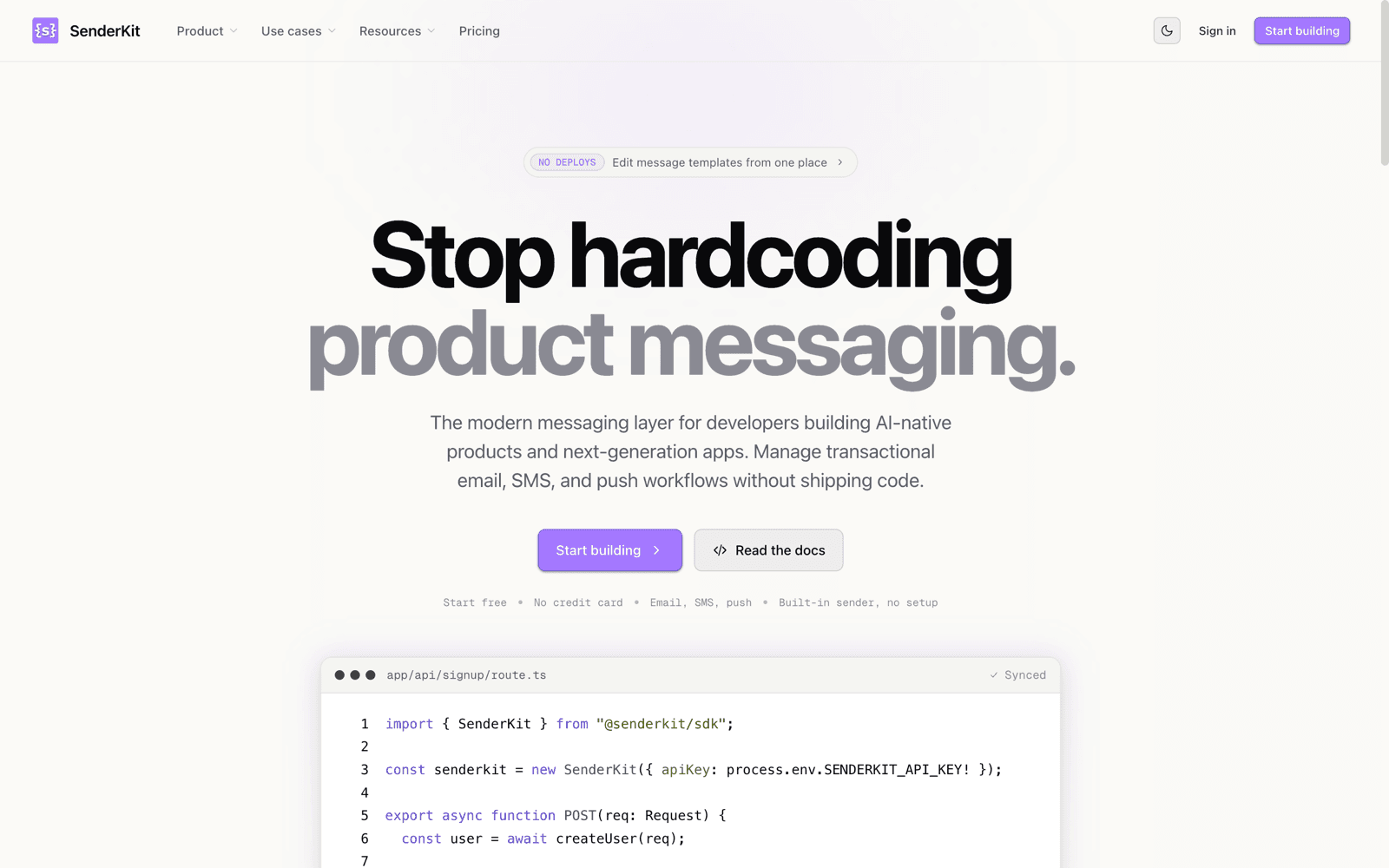
SenderKit · Messaging SaaS
Shipped in 14 daysFrom zero to production usage in under one month.
We shaped the product, designed the workflow, built the frontend, backend, messaging infrastructure, and production launch. In its first month, SenderKit reached 440 users and sent 13,507 emails.
440
users
13,507
emails sent
< 1 mo
to traction
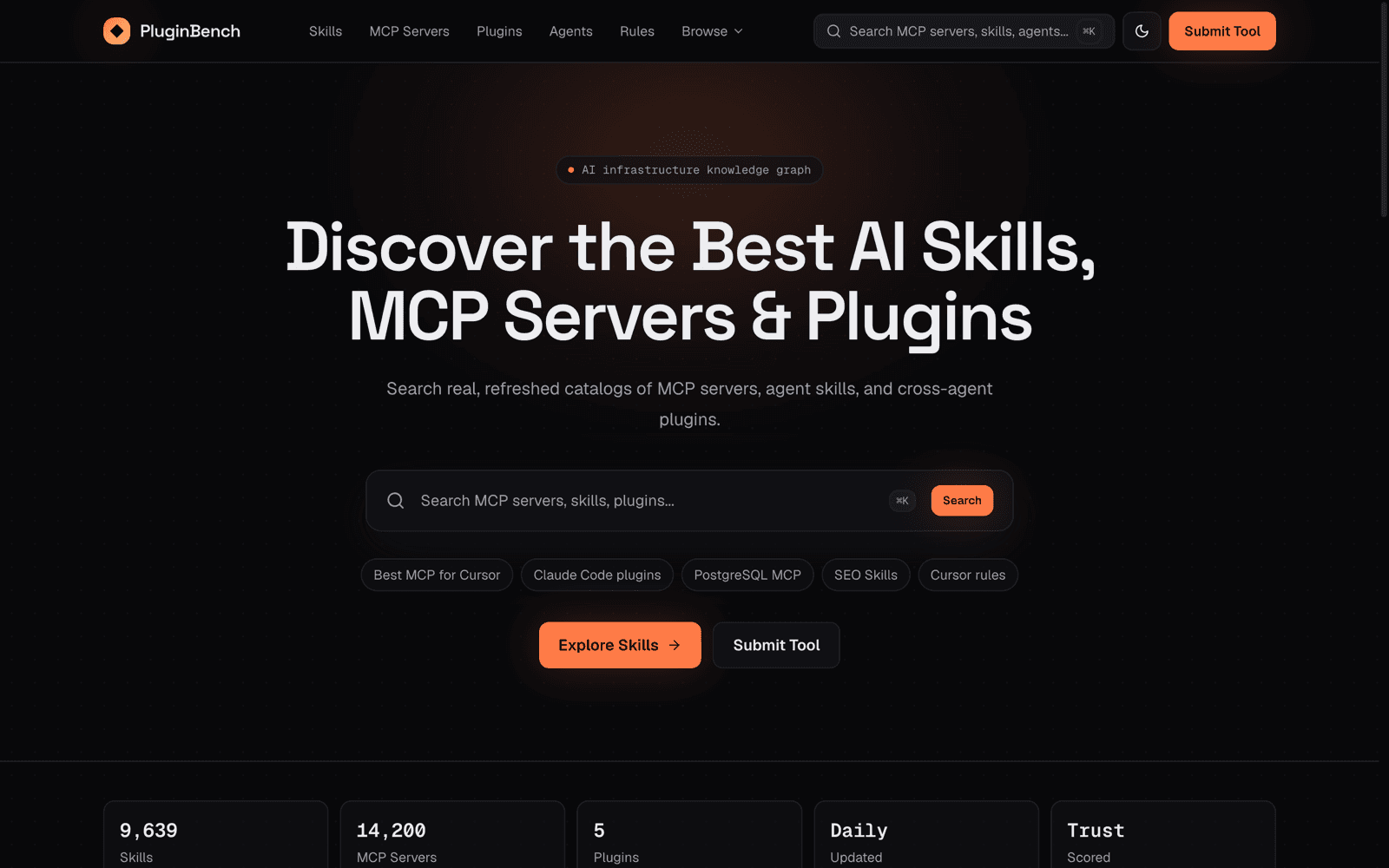
PluginBench · AI infrastructure
Shipped in 14 daysA fragmented ecosystem made searchable.
We built the discovery product, automated ingestion, search, trust signals, and production delivery. The live catalog now indexes 23k+ Skills and MCP Servers and refreshes every day.
23k+
indexed capabilities
Daily
catalog refresh
See the full production case-study slider on our MVP development services homepage.
A qualifying SaaS MVP is $15,000 fixed.
SaaS budgets vary because scope varies. Our price applies to one focused production web product that fits the 15-day boundary. We lock that boundary before the contract.
Need broader market ranges and methodology? Read our MVP development cost guide.
Core SaaS MVP
$15k
15 working days
Four milestones. Working software every day.
This is the same delivery system behind our core MVP offer — applied to one defined SaaS workflow.
- Day 0
Scope locked
We agree on the user, core workflow, launch boundary, fixed price, and fixed date before build starts.
- Days 1–3
Product flow designed
You click through the real journey early, while changing a decision is still cheap.
- Days 4–12
SaaS built in vertical slices
Working software lands daily: interface, business logic, data, and integrations connected end to end.
- Days 13–15
QA, production, handover
We test the core path, deploy it live, and hand over the repo, accounts, documentation, and walkthrough.
The questions that change scope before code starts.
How much does it cost to build a SaaS MVP?
The market spans a wide range because teams use the same label for prototypes, focused production products, and near-complete platforms. MVPHatch charges $15,000 fixed for a qualifying SaaS MVP: one tightly scoped web product, built and launched in 15 working days. Larger or regulated scopes are quoted separately.
How long does SaaS MVP development take?
Our Core MVP sprint is 15 working days after scope is locked. That is realistic when the product has one primary user journey, a limited role model, and a small number of essential integrations. If the scope cannot be made clear before the sprint, it is not ready for a fixed 15-day build.
What should be included in a SaaS MVP?
Include everything required for one real user to reach a valuable outcome: access, minimum onboarding, the core workflow, reliable data, essential feedback or notifications, production deployment, and the events needed to learn from usage. Add billing only when paid demand is part of the first test.
Can a production SaaS MVP really be built in 15 days?
Yes, when the product is genuinely MVP-sized and decisions are made quickly. Fifteen days does not fit several products, many roles, complex compliance, dozens of integrations, or web and native mobile at once. We say that before the contract, not halfway through the build.
Does every SaaS MVP need Stripe?
No. Stripe belongs in version one when the question is whether users will pay, or when payment unlocks the core workflow. For an invite-only beta, assisted pilot, or enterprise sales motion, billing can often stay manual until the product has stronger evidence.
Should the first version include an admin panel?
Usually it needs minimum operational tooling, not a full admin product. Early on, the team may only need to find a user, inspect a job, retry a failed action, or change a status safely. Configurable permissions and polished reporting can wait until operations reveal what is actually needed.
Can I build my SaaS MVP with Lovable, Bolt, or Replit?
Sometimes, yes. Current AI builders can create interfaces, databases, authentication, deployments, and integrations, and they are excellent for prototypes and straightforward validation. Bring in experienced engineers when the product needs custom business rules, careful data boundaries, payment or webhook reliability, security review, testing, and code another team can maintain.
Should I build web or mobile first?
For most SaaS products, web is the faster first test: one deployment, instant updates, simpler billing, and no app-store review. Native mobile belongs first when the core value depends on device capabilities, field use, push-driven behavior, or a mobile-only audience.
What is the difference between a SaaS prototype and an MVP?
A prototype proves that a concept or interaction makes sense. A SaaS MVP is working production software: real users sign in, data persists, the core workflow runs end to end, and the team can observe what happens. Both are useful, but they answer different questions.
Know the core workflow your SaaS needs?
We'll tell you whether it fits our $15k / 15-working-day scope — and what needs to change if it does not.
20 minutes · direct with a senior builder